


Our ‘craft’ is our knowledge, and we aim to reflect this in a ‘professional pride’, with an approach to work that aims to maximise the potential offered by each new design we work on with our clients. We have skills, and a ‘corporate DNA’ that have been passed through generations of people working within the company. This relates to physical skills, which is seen from our unique production profile, but perhaps less obvious is the the underlying ‘thought process’ that helps refine both technical and aesthetic aspects.
We have both the ‘know how’ and ability to apply this at the practical level. This comes from a deep understanding of the subtleties, and a desire to create things of lasting beauty and commercial appeal. This process starts with experimentation, and the development of the designs and colour sampling with clients, through to bulk. We are one of the few ‘craft’ producers with the facilities and control to take this from small runs through to industrial volumes.
The shape of industry has changed significantly – our structure now welcomes collaborations with others, both in term of our extended team of designers, but also an international network of individuals and companies that possess the necessary skills. (Convergence) between technology and design ( digital machinery, novel chemical formulations for raised foils, resist prints,Devore )
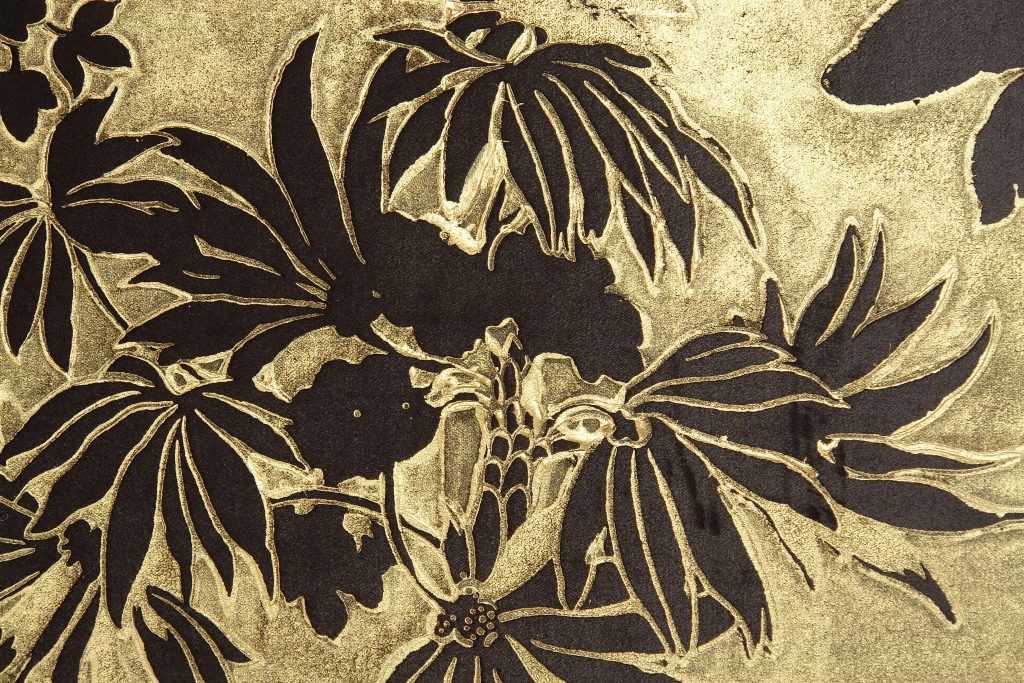
Design sourcing and product development is a key part of what we offer – our focus is upon providing ‘solutions’. The Design Development team help the process of design sourcing where required, either through network of designers, or through the Turnbull Archive. This is one of the largest private archives for Furnishing Fabrics, and provides a comprehensive and extensive resource for both design and colour. www.turnbullarchive.com
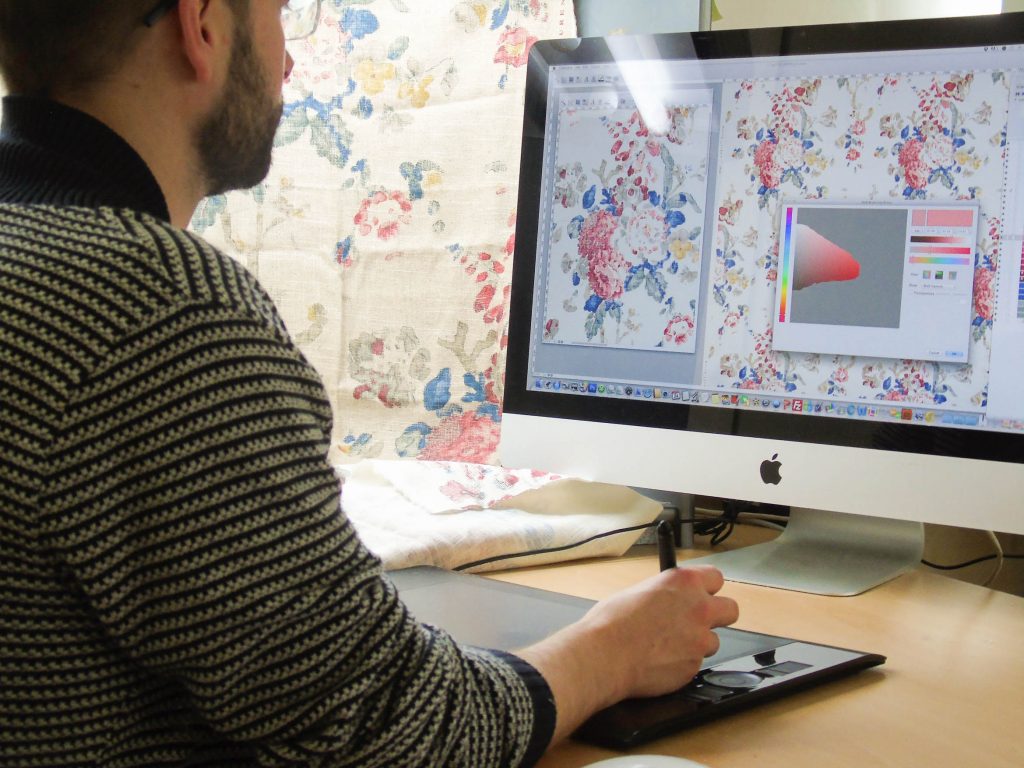
Patterns can be produced using externally produced files, or in many cases nurtured and developed by our Separations Studio. Through dialogue with clients, the interpretation of the basic designs are refined and developed for the particular production area. The designs are sympathetically refined to suit the substrate. This is particularly evident in the digital area, where the interpretations skills are combined with characterful and interesting selection of basecloths.
A constant process of research and development enables us to be at the forefront of the industry, and we are strive to innovate on the aesthetic, creative and technical fronts. We are one of the leading creative manufacturers, and the process of experimentation has resulted in commercial success. Whilst others will take comfort in standard production routes and ‘factory favourable simplicities’, we regularly go that bit further to help produce the best possible product.
DIGITAL
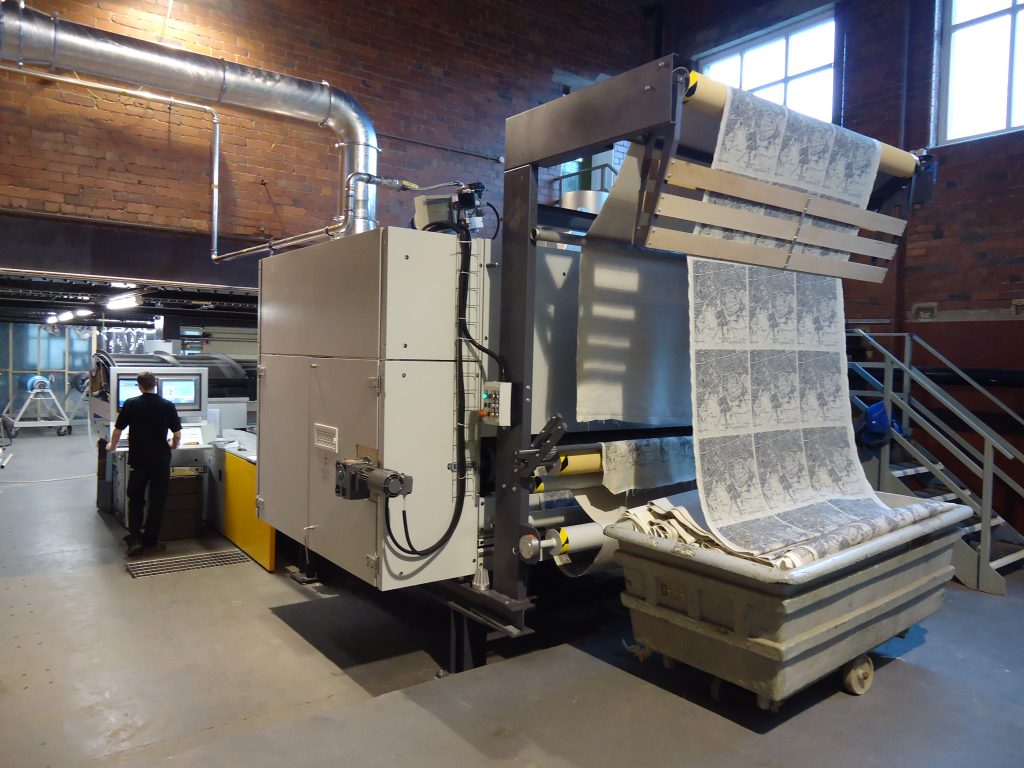
We have worked with machine supplies and ink manufacturers to produce the first digital machinery running with VAT dyestuffs. This is the same dyestuffs used for our screen prints. The introduction of digital technology has been a mixed blessing. From our standpoint it has been the most exciting development in printed textiles for more than half a century, with the potential to unleash innovation and creativity for designers and manufacturers. Not all have entered the market with these ideals and values, and much damage has been done to the perception of digital by those creating soulless ‘colour photocopies on fabric.’
Our own journey has been more measured – our machinery differs to that used by the majority of other manufacturers as does the way we use it. There is as much craft and artistry in our execution of digital designs as any of the more classical methods of printing, and we are excited by the creative possibilities.
SCREEN
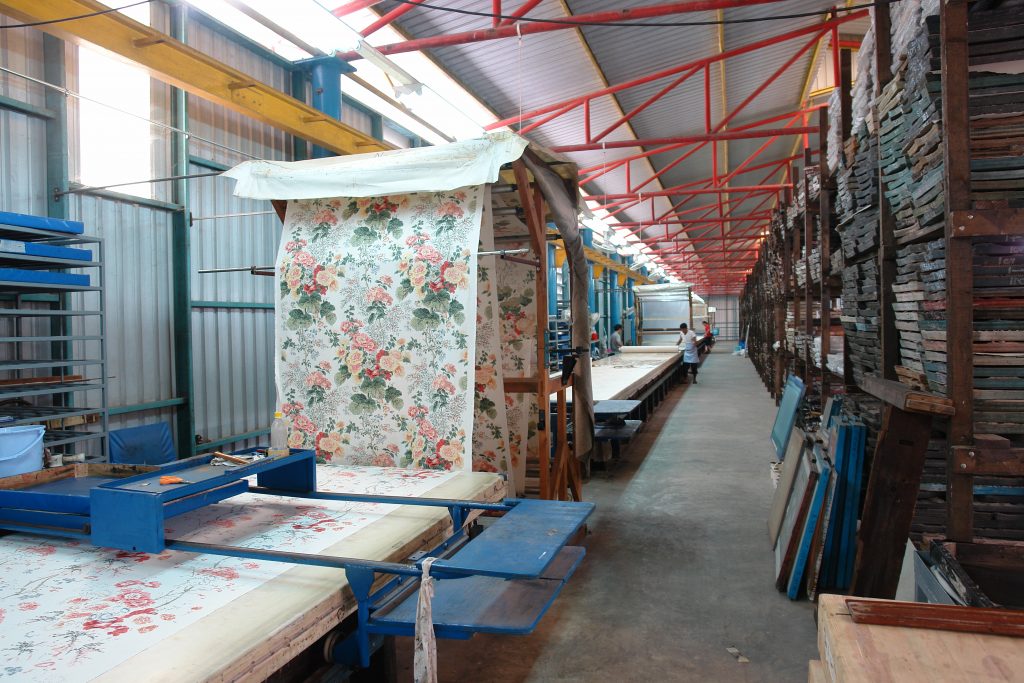
Whilst advancements in digital technology have impacted upon ‘continuous methods’ of screen printing, such as rotary and continuous flat bed, the same cannot be said for ‘wet on dry’.
Here, the printing action is slower, and layers of colour or ‘fall-ons’ are possible. Our screen production is centred upon designs that maximise the undoubted benefits reveal a different print mark. Complex ‘multiple fall-one are possible with Vat dyes due to their translucent character, and layering and ‘colour twist’ can provide interesting effects. In other cases, we combine Vats with pigments, and are then able to glaze. The screen prints are also vehicles for complex raised foils, resist prints and Devore. We revel in the technical challenges, and enjoy the process of pushing the boundaries and working with some of the most innovative design studios.
BLOCK
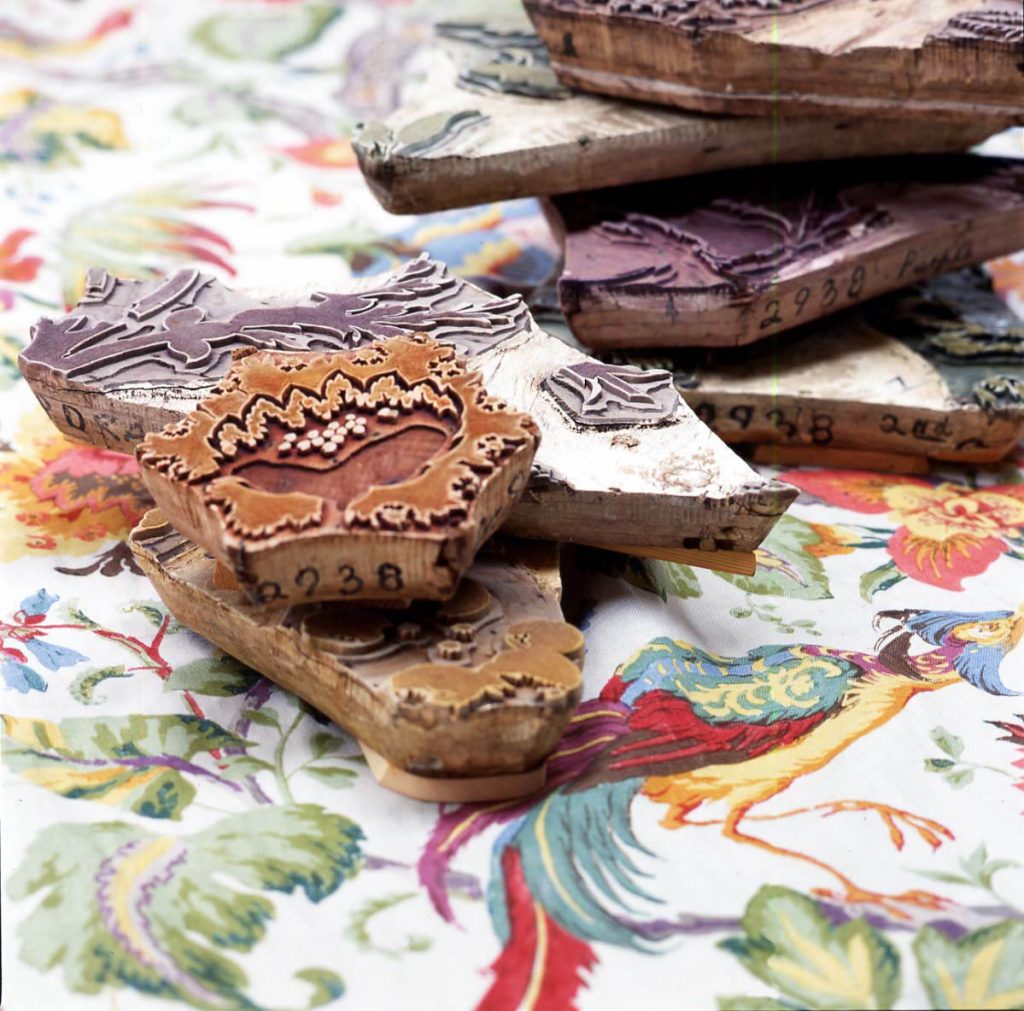
Block prints create a unique print mark -and something that cannot be replicated by machine. . It would be the equivalent of comparing an original oil painting with a reproduction. The original has depth, layers of colour, and the marks of the artist, and an image of the original.
This is where the head, heart and the hand going together, and a very special category of textile printing. There is much mythology about craftsmanship. This is not a token gesture to support a marketing story, or a ‘working museum’. We produce complex ‘multi colour’ patterns, both from our large archive of block patterns, but also where we cut new blocks for contemporary patterns. The final product has an enduring appeal, and this remains a vibrant part of our production profile.
WEAVE
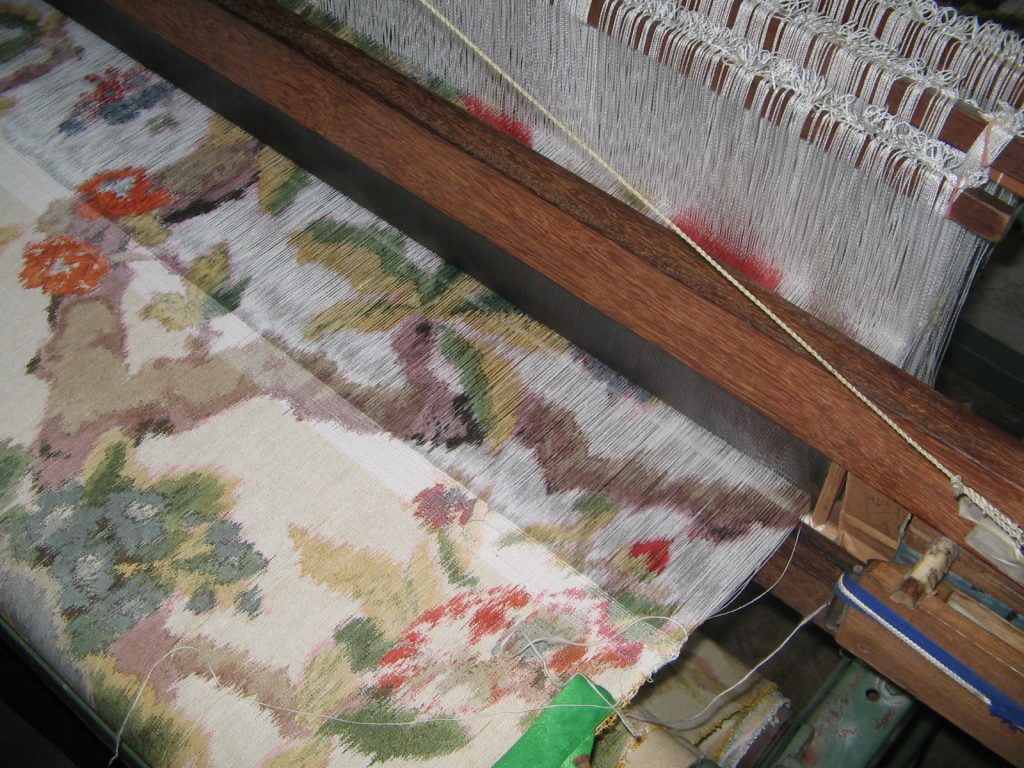
Our weaving operations are split into two areas. We weave a number of constructions that are primarily used as print bases. The second area relates to colour jacquard and sonny, some of which uses yarn that has been coloured by printing ( also known as warp prints and shadow tissues). We also produce coloured and patterned grounds, predominantly using yarn dyed components.
We have a carefully selected cross section of basecloths, which spans cottons, linens, velvets, voiles, wool and silks. We regularly combine production methods. New techniques are combined with old, in imaginative ways – resist prints, Devore, foiling, embroidery, and bring together digital, screen and hand-block. .
Finishing
We have a comprehensive support structure in terms of colour steaming, washing, tinting, stentering, together with Dyeing, Glazing/calendaring. Our techniques are constantly evolving and developing – some examples are shown below .
Things men have made with wakened hands,
and put sort life into are awake through years with transferred touch,
and go on glowing for long years.And for this reason, some old things are lovely
warm still with the life of the forgotten men who made them.